

Hogwarts School of Witchcraft and Wizardry
WILDLIFE RESEARCH CENTER

Organ Systems
Anatomically, phoenixes may resemble common birds from the Muggle world. However, they do possess certain physiological traits that can only be described as magical!
Skeletal System
Morphologically, the phoenix most closely resembles large birds of prey such as eagles, despite being an herbivore itself. This suggests the presence of predatory birds in their evolutionary ancestry. This is most observed in their skeletal structure. Like other avian species, the phoenix has an ossified endoskeleton to provide the proper structural support needed to move, fly and other daily activities. This also provides them with the necessary protection for their internal organs against trauma and other foreign threats.
Phoenixes possess the same modifications to their skeletal system as other avians. This includes pneumatic or hollow bones to reduce their weight for easier flight. Their structural integrity is compensated for by the fusion of several bones, most notably along most of the vertebrae to provide the needed rigidity for flight. This modification must be extensive within this species, as domesticated phoenixes have been observed to carry a lot of weight with no injury nor impact to their performance, including several people on at least one recorded occasion. This is supplemented by their flattened ribs, fused collar bones, and keeled sternum which allow for the attachment of large and powerful flight muscles in the breast. Another notable feature is the phoenix skull. While relatively small for their size, the skull contains a larger braincase to contain their enlarged brains needed to exhibit more complex behaviors than the average bird species. They also possess a beak like other avians, which is structurally, a highly elongated and keratinized jaw. What is notable about their beak is that it is large, sharp, and curved like a large predatory bird. Despite not needing this for feeding as an herbivore, the phoenix most likely maintained this structure from its ancestors as a necessary defense against the more dangerous beasts of the Wizarding World.


Muscular System
Phoenixes are known for their strength, whether for flying great distances, carrying large amounts of weight, or defending against larger and more dangerous creatures, and this is reflected by their muscular system. The phoenix is largely made up of dark, red muscle fibers, especially around the breast. These are due to the active flight muscles requiring more oxygen from circulatory system.
The muscles of the phoenix responsible for flight make up around 50% of its weight. The muscles that are used for flight are the supracoracoideus, used to bring up the wings, while the pectoralis are the ones used for the downwards movement. The supracoracoideus is seen on the sternum and through this, it has the ability to be like a pulley through the use of a tendon allowing it to move. This muscle is also significantly smaller than its counterpart the pectoralis, which are the largest muscles in the phoenix's body. The more unique feature of the phoenix muscular system is its notably powerful tail muscles, capable of carrying four humans with no effort. While these are normally small as to only control the direction of the tail in most other birds, they are more developed in phoenixes, possibly needed by their very large tail feather arrangements. Another important muscle in the phoenix are its smooth muscles around the skin. These are also responsible for moving the feathers during flight maneuvers.
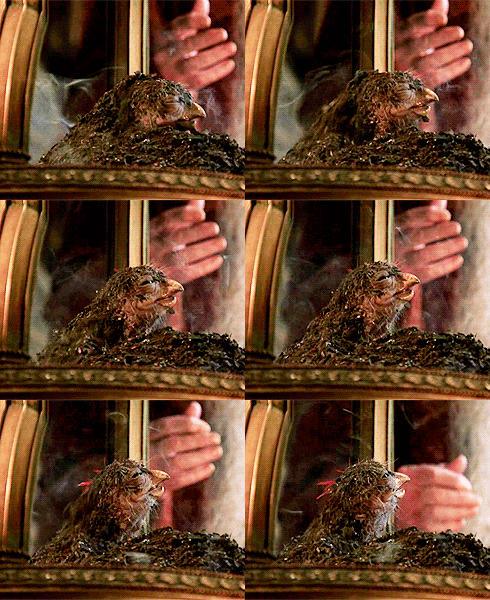
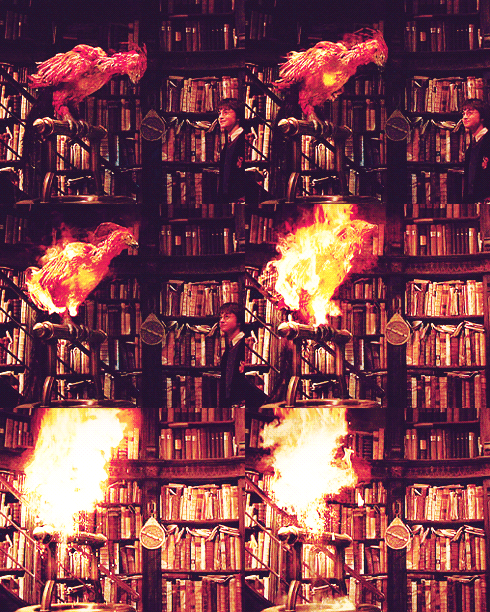
A phoenix's Burning Day, while mostly magical in nature, has been theorized to be linked with its muscular system. At the end of its natural lifespan or when encountering life-threatening injury, the phoenix's muscular system triggers a hypermetabolic state characterized by increased body temperature and rapid breakdown of skeletal muscle and organ tissue. This process produces so much heat that it produces fire that burns through the aging body, leaving only the feathers and ash. At the end of the process, the phoenix's magic is able to collect the leftover metabolic byproducts and reform the body but only as a featherless chick.
Integumentary System
Phoenix skin generally resembles that of a normal bird in that it is composed of an epidermis, basement membrane, and dermis. Their skin has been observed to have great strength and durability, implying that their epidermis is highly keratinized. Their skin must also be highly flexible to enable movement for flight. This is made possible by a rich supply of collagen in their basement membrane and dermal layer. It helps that a phoenix does not permanently age, so its collagen is naturally replenished during a Burning Day, when it returns to being a chick. Another notable feature is their dark-colored skin. This signifies a very dense supply of blood vessels in the dermis, especially in unfeathered areas. This provides it with the thermoregulation necessary to live in high altitudes and is what gives off the radiating heat from its body.
The most prominent feature of the phoenix integument is its feathers, particularly its characteristic contour feathers. These feathers are responsible for enabling flight, maintaining the bird’s form, and giving its scarlet and gold colors. While structurally similar to normal bird feathers, a phoenix’s contour feathers are famous and highly coveted for their magical properties. These are apparent as the body feathers emit a faint glow, while their tail feathers radiate heat, implying that these are instrumental for their ability to manipulate fire. On the other hand, their down and filoplume are not as highly regarded as their contour feathers, so it is assumed that they do not possess any unusual characteristics nor special magical properties. As in normal birds, down feathers are for insulation while filoplume feathers are for detecting sensory information like wind direction and damaged feathers.
The last features of the phoenix integumentary system are its beaks and talons. Aside from their golden color, these do not possess any special characteristics. These are highly keratinized appendages used for feeding and protection from predators. However, they are still notable for being highly durable and sharp, enough to injure and blind a basilisk, which is a Category XXXXX Beast.

Phoenix Contour Feather


Respiratory System
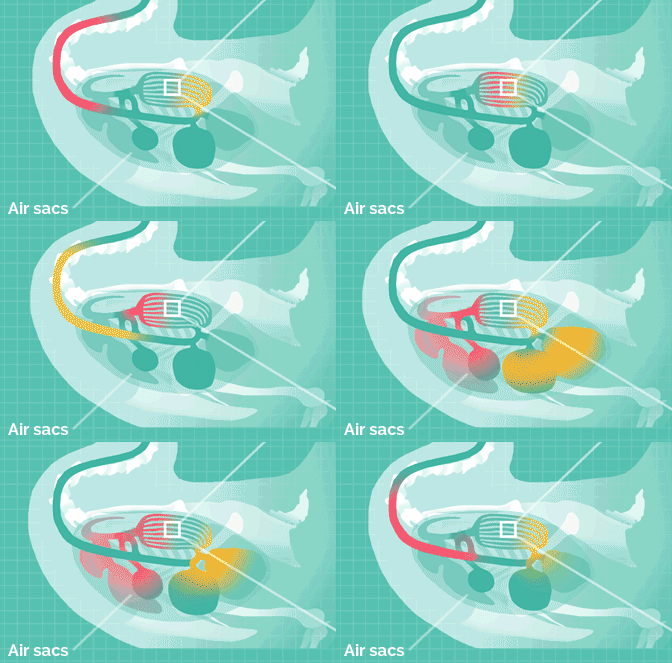
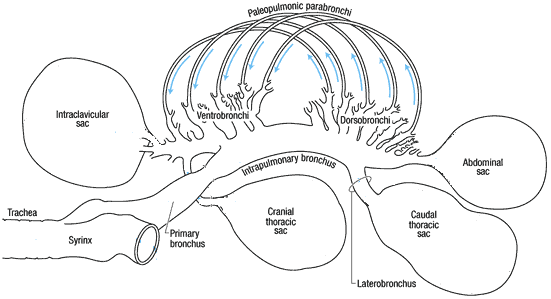
As part of their respiratory system, phoenixes have nine air sacs that work together with their lungs. Unlike the lungs, however, these air sacs are not directly involved in the exchange of gases. They allow for air to flow unidirectionally through the lungs. This means that the air flowing through their lungs is mostly fresh air and will thus contain more oxygen that can diffuse into their blood. The air sacs also allow the lungs of phoenixes to take in oxygen during both inhalation and exhalation. Altogether, phoenixes have a highly efficient lung structure that allows them to have enough oxygen for physically demanding activities like flight and to breathe at high altitudes.
Air enters and exits the respiratory system through the mouth or nostrils (nares). As air is inhaled, it moves to the pharynx then the trachea. Located right before the trachea splits is the syrinx, which is their voicebox that is unique to each bird. The syrinx is responsible for producing magical songs of a phoenix such as the Phoenix Lament. What’s special about its syrinx is that the sounds it produces touch the soul of the listener, making it feel like the song is coming from within them.
From the syrinx, the trachea splits into two primary bronchi, which enter the lungs and become mesobronchi. Air then moves either to air sacs or further into the lungs through the dorsobronchi branches, which further branch off into the parabronchi. Air capillaries line the walls of parabronchi and are surrounded by a dense network of blood capillaries. This is where gas exchange between the lungs and the blood takes place. The air then moves from the parabronchi to the ventrobronchi and is exhaled out of the lungs or temporarily moved to air sacs, which houses the air until it is exhaled.
Nervous System
A phoenix’s nervous system does significantly differ from a regular avian nervous system. The phoenix brain has a large cerebellum to coordinate the necessary skeletal muscle activity for flight. It also possesses enlarged cerebral hemispheres, most notable for enhanced sensory perception, decision-making, and even emotional capacity. In fact, phoenixes have been known to be highly intelligent and exhibit complex behaviors when interacting with their human companions, including non-verbal communication, aiding and protecting other beings, even mourning the loss of their companion in a song called the “Phoenix Lament”. They possess a relatively large occipital lobe for enhanced eyesight yet also have small olfactory lobes for their typically weak sense of smell. Additionally, phoenixes possess a fairly standard avian spinal cord. It has an enlarged cervical region to control the wings and an enlarged lumbar region to control the legs. The thoracic region is relatively thin because their wings and legs do not have to be coordinated with each other. The sacral region is short as it does not extend to the length of the tail.
Phoenix eyes are large relative to their size and are highly sensitive to sight due to their reliance on eyesight. These are located on either side of the face but also have a range of binocular sight which is important for depth perception when flying. Their ears, while different in structure, are highly developed and have similar hearing ranges to humans which explains how their songs have such a potent effect. Lacking structures like the three middle ear bones, phoenixes hear when sound enters the feathery outer ear canal, vibrates the tympanic membrane, gets transmitted to the cochlea where it is picked up by the auditory nerve. Phoenixes do not have highly developed senses of smell and have few taste buds which line the tongue and floor of their mouth and are more important for detecting temperature.

Brain

Spinal Cord
Eye



Phoenix pellet
Digestive System
The digestive system of a phoenix is identical to other large avians, although it is important to note that the phoenix is strictly an herbivore. A phoenix has a long, gold beak, where the digestive system starts as this is the first place for food. The food is swallowed, passing through the oesophagus and is stored in the crop, which can be found in the upper alimentary tract. Up to two pounds of food can be stored in the crop that a phoenix can go without food for days. This is because they are able to consume a large amount of plants. The stomach has two chambers that have different functions: the proventriculus, which breaks down the food with enzymes and acids, and the gizzard that mechanically breaks down food using the muscles. After the food passes through the stomach’s two chambers, it passes through the short small intestine. Food that is not digested, which is the indigestible plant material like cellulose, is vomited out as pellets. This undigested food goes back up the digestive tract, exiting through the mouth. The digested food, on the other hand, after passing through the intestine, exists as feces in the cloaca.
A phoenix's pellets are highly desired as they contain gemstones, and they also have medicinal properties. This is due to their diet of magical plants found around the mountains of the Wizarding World and the unique interactions they have similar to potion brewing. While their exact preferred diet is unknown due to limited observation, it is assumed to consist primarily of healing herbs such as dittany, wormwood, and moly.
Reproductive System
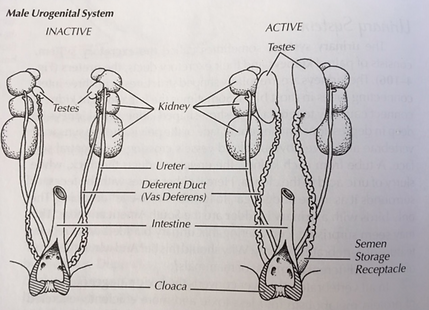
Phoenixes are dioecious, so the reproductive system of an individual phoenix differs depending on its sex. A female phoenix’s reproductive system includes the ovaries, ova, and the infundibulum. The ova comes from the ovaries, which pass through the infundibulum, the funnel-like tube structure, and then it makes its way to the cloaca, an opening, where it exists. Urine, feces, and eggs exit through the cloaca. A male phoenix’s reproductive system, on the other hand, contains the testes and deferent duct. The sperm travels through a deferent duct and then exists through the cloaca, which a female phoenix also has. Before phoenixes reproduce, they build a 4-5 foot in diameter and 2-4 feet deep nest on a cliff or in a tree found in open habitat. Both male and female phoenixes will build this nest by using sticks and arranging them properly. The copulation of phoenixes is done in a short period of time. Their cloacas evert and come into contact, and this is called the “cloacal kiss.” Sperm lives longer in a phoenix than in other mammals. It travels to the infundibulum where fertilization occurs. The fertilized ova are now called zygotes, and they travel to the cloaca, where they exit.
Phoenix eggs are glossy blue or green, and are unique in the way that they do not require incubation. This is possibly due to the phoenix's control of its temperature and fire which manifests in some form even as a developing chick, making incubation unnecessary. It takes years for them to hatch, which explains their rather low population in the world despite being effectively immortal.
Aside from copulation, a phoenix also undergoes regeneration. While not exactly considered reproduction in Muggle terms as it simply reproduces itself, it is a unique process that is an integral part of its life cycle. Once a phoenix has reached old age, it bursts into flames, consuming its body and born again as a new chick in its ashes. This phenomenon is called the Burning day, and this cycle continues throughout a phoenix's life which possibly lasts forever.
Phoenix in flames

Female Reproductive System

Male Reproductive System
Phoenix Egg
Phoenix in flames
Reborn Phoenix chick

Major arteries

Major veins
Circulatory System
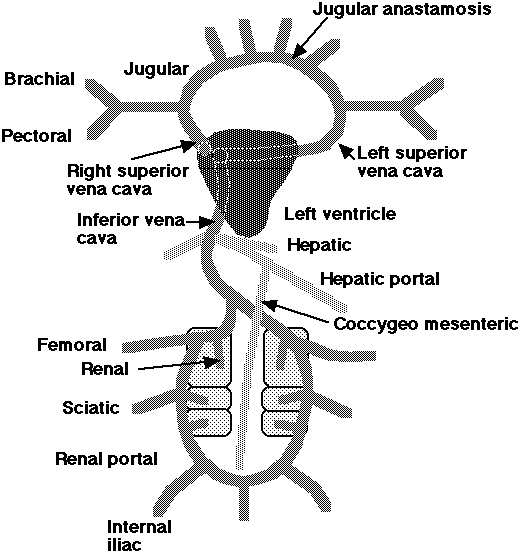
The circulatory system of a phoenix follows that of a typical avian. As with all vertebrates, they have a closed circulatory system, meaning that blood circulates within blood vessels. Phoenixes have a 4-chambered heart that works in a double-loop circulation, keeping oxygenated blood and deoxygenated blood completely separate. The left ventricle of the heart has thicker and more muscular walls than that of the right ventricle because it needs to generate greater pressure to pump blood throughout the whole body. Additionally, phoenixes have especially larger hearts than most birds, relative to their body size and mass, in order to meet the high metabolic demands of their powerful flight.
From the heart, the blood is pumped into blood vessels. These blood vessels are arteries, which carry blood away from the heart, veins, which carry blood back to the heart, and capillaries, which connect arteries and veins and is where gas and nutrient exchange takes place. Since phoenixes usually live on high mountain peaks, their circulatory system has adaptations for high-altitude flight. These adaptations are increased capillaries per muscle fiber and higher capillary densities in their flight muscles, enhancing the oxygen supply to these muscles. Because of their pyrokinetic abilities, they also have a dense network of wider blood vessels in their dermis compared to other birds to allow heat to dissipate through their skin and control their body temperature. This is what causes phoenixes to be hot to the touch.
The blood of phoenixes is composed of plasma and formed elements such as erythrocytes, leukocytes, and thrombocytes. Unlike mammals, they have nucleated red blood cells. Their erythrocytes and leukocytes are also very special in that they give the phoenix extraordinary regenerative capabilities, aiding in the phoenix’s great immunity to afflictions and injury.